MemoMind One vs RayNeo iO: How They Compare in Everyday Use?
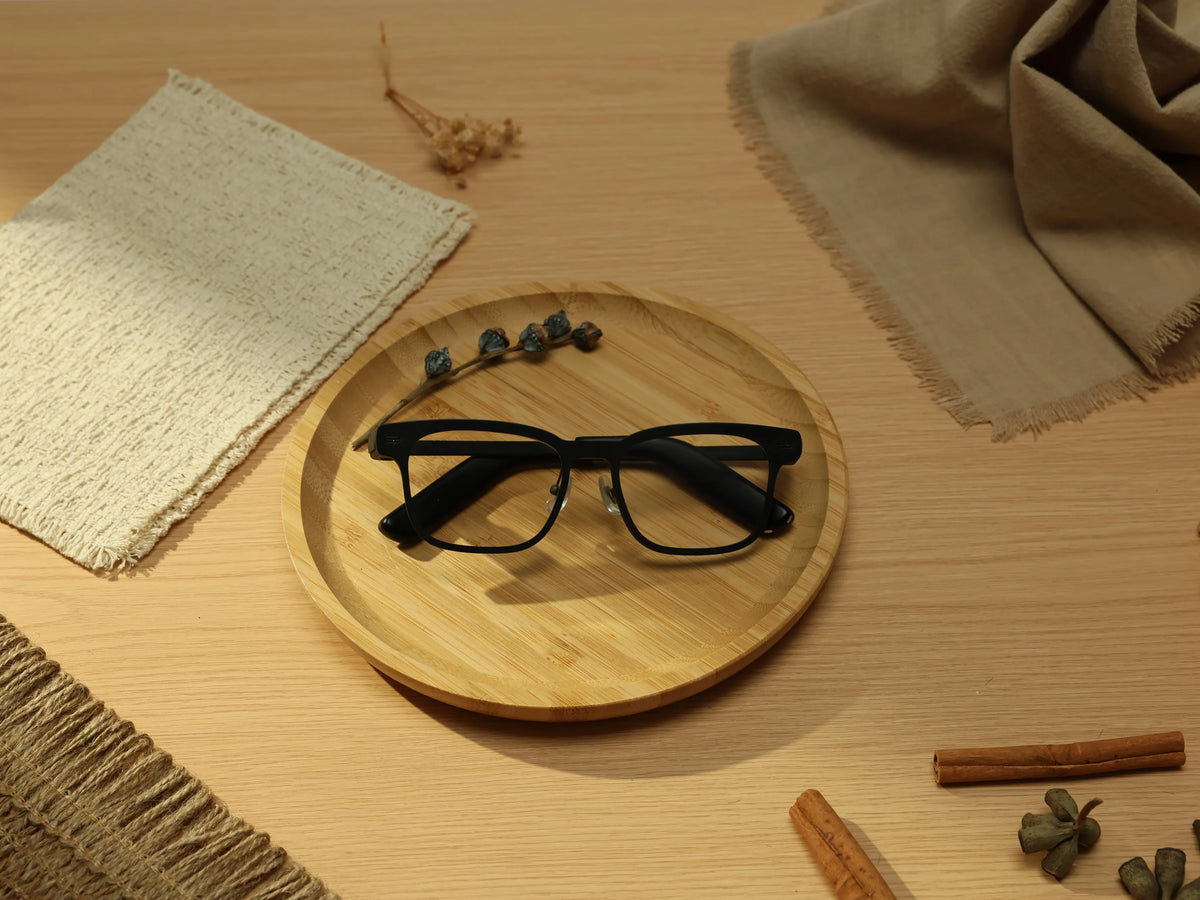
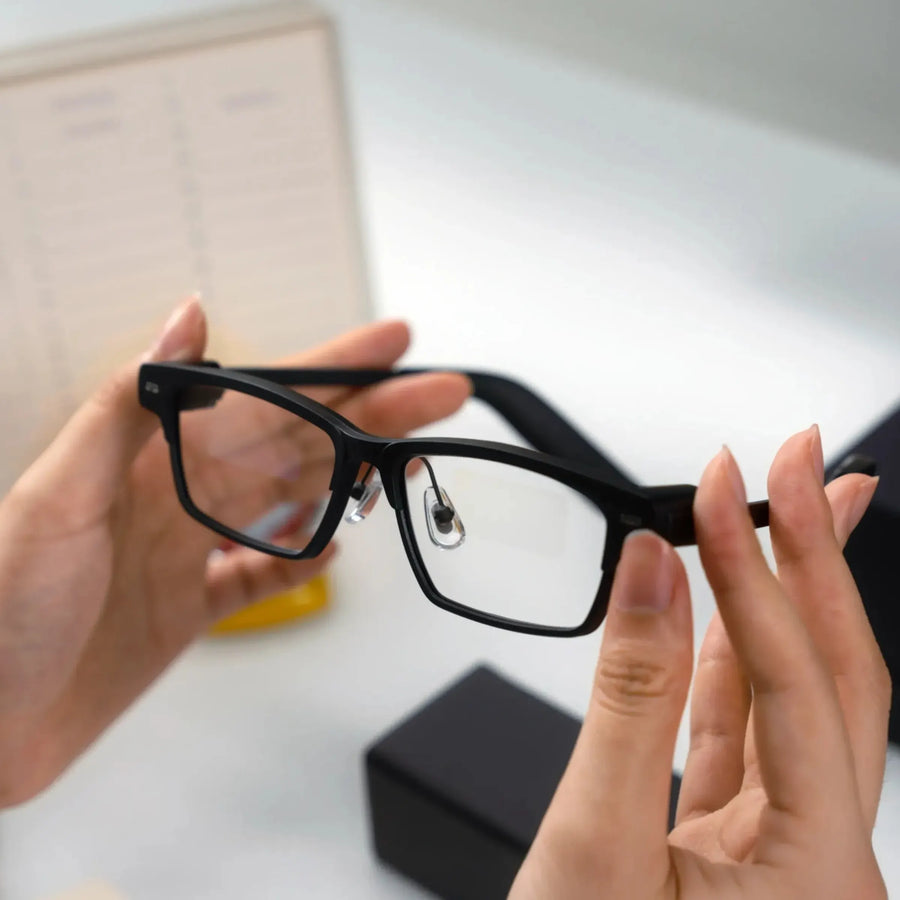
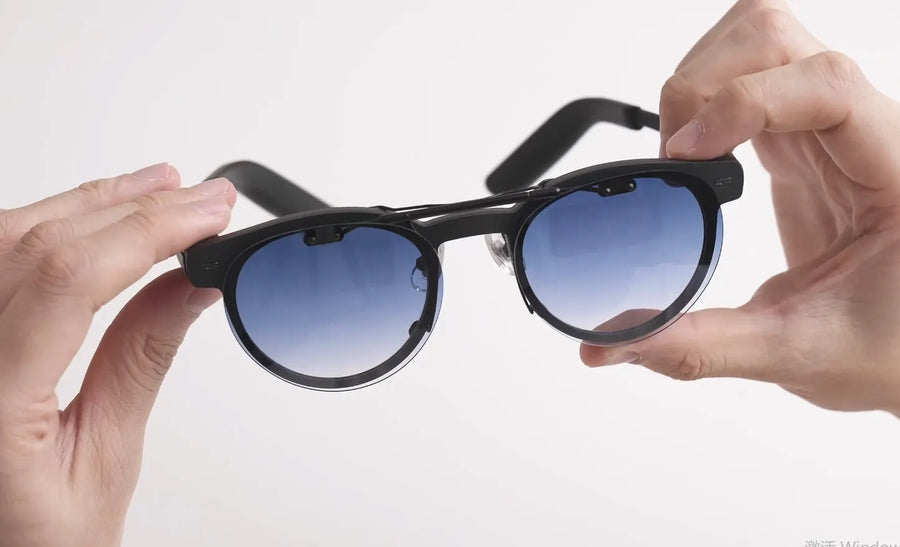
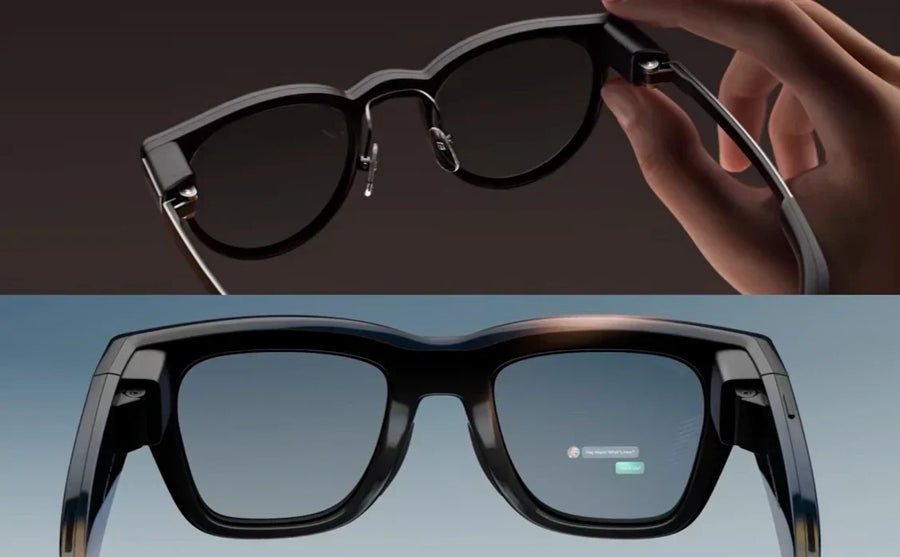
Quick Answer: MemoMind One and RayNeo iO are both camera-free AI glasses that pair with a phone, use a waveguide display, and support voice interaction, translation, and transcription. MemoMind One (46.6g) has built-in open-ear speakers and scored higher overall in translation and meeting-transcription tests. RayNeo iO (33g) is lighter and uses a physical Smart Crown.
This comparison draws on these sources: official specifications, hands-on observations from two creators (@Non-tech-tech-guy and @Informal-Tech), and MemoMind’s internal tests run on both glasses in September 2026.
Specs at a Glance
| MemoMind One | RayNeo iO | |
|---|---|---|
| Weight | 46.6g | 33g |
| Display | 25° FOV / 2,000 nits | 23.5° FOV / 1,300 nits |
| Speakers | Yes | No |
| Controls | Temple button + voice + gestures | Smart Crown + voice + gestures |
| Translation | 53 languages | 55 languages |
| Battery | 16+ hrs mixed use | Up to 2 days typical use |
| Camera | None | None |
| Durability | Splash resistance | IP54 |
What Matters in Everyday Use
Weight and Control Method
At 33g, it is about 13.6g lighter than MemoMind One at 46.6g.
@Non-tech-tech-guy said the difference was immediately noticeable when switching between the two, particularly after wearing MemoMind for several hours. @Informal-Tech traced that extra weight to MemoMind's thicker temples, which house its built-in speakers.
The control systems also take different approaches.
RayNeo centers its physical controls around the Smart Crown, which can be used for selection.@Non-tech-tech-guy grew fond of scrolling back through translation with it during his test week. MemoMind combines voice commands, a physical button, head gestures, and has also opened its platform to developers, giving third-party apps another way to interact with the glasses as the ecosystem develops.
Speakers and Audio Output
The most fundamental hardware difference is audio.
MemoMind One has built-in open-ear speakers tuned with Harman AudioEFX, while RayNeo iO does not. This allows MemoMind One to handle phone calls, music, podcasts, AI responses, and spoken turn-by-turn navigation without requiring a separate audio device.
@Non-tech-tech-guy described MemoMind's audio as practical rather than exceptional and noted some sound leakage at higher volumes. It is not a replacement for headphones in every situation, but he still considered the speakers a major advantage.@Informal-Tech placed even more emphasis on the speakers, particularly for navigation. During his testing, he used spoken directions, rerouting, and distance updates through MemoMind and found the navigation useful in practice.
The speaker difference is a hardware-level distinction, so it directly affects what each pair can do without another audio device.
For someone who wants AI glasses to handle calls, audio playback, AI responses, or spoken navigation without relying on another audio device, the presence of speakers may matter more than a difference in software features.
Display Brightness and Outdoor Readability
MemoMind One has the higher display specifications: a 25° field of view and up to 2,000 nits, compared with RayNeo iO's 23.5° field of view and up to 1,300 nits.
The hands-on results were more personal.
@Informal-Tech found MemoMind's larger display useful for translation because more text could fit into the viewing area. @Non-tech-tech-guy, however, found RayNeo's text sharper and easier to read in bright outdoor conditions. Despite its lower stated brightness, he felt RayNeo's display looked brighter and clearer during direct sunlight testing.
Both reviewers also encountered visibility limitations in strong sunlight.
For you, the practical takeaway is that display specifications can indicate potential visibility, but factors such as text rendering, contrast, ambient light, and individual perception also affect how readable an AI glasses display feels in everyday use.
Translation and AI Response Quality
To compare the translation quality of the two products, we conducted specific tests. The translation test was conducted in a noisy environment and evaluated three aspects: source recognition (did the glasses correctly capture the original speech), semantic accuracy (was the meaning preserved), and severe mistranslations (such as incorrect numbers, negations, or subjects).
| Language Direction | MemoMind ASR | RayNeo ASR | MemoMind Semantic | RayNeo Semantic | MemoMind Severe Mistranslation | RayNeo Severe Mistranslation |
|---|---|---|---|---|---|---|
| Chinese → English | 97.74% | 98.12% | 75.64% | 88.46% | 2.56% (2) | 3.85% (3) |
| German → English | 92.89% | 89.87% | 89.43% | 82.11% | 0.00% (0) | 1.63% (2) |
| French → English | 95.33% | 93.29% | 89.94% | 88.83% | 1.12% (2) | 1.68% (3) |
| Spanish → English | 93.08% | 88.11% | 87.78% | 81.11% | 1.11% (1) | 3.33% (3) |
| English → Chinese | 97.66% | 95.23% | 84.04% | 87.23% | 0.00% (0) | 0.00% (0) |
| English → German | 98.10% | 93.82% | 90.43% | 70.21% | 2.13% (2) | 4.26% (4) |
| English → French | 97.49% | 92.90% | 86.17% | 82.98% | 0.00% (0) | 1.06% (1) |
| English → Spanish | 98.31% | 96.50% | 90.43% | 92.55% | 0.00% (0) | 1.06% (1) |
| Average/Total | 96.33% | 93.48% | 86.73% | 84.19% | 0.87% (7 total) | 2.11% (17 total) |
Note: These results come from MemoMind's internal comparative testing in September 2026. The same test prompts were used across both devices under the same test conditions. Results may vary with software versions, network conditions, speakers, accents, and test environments.
MemoMind One had higher source recognition in seven of eight directions and higher semantic accuracy in five. RayNeo iO was clearly stronger in Chinese to English (88.46% against 75.64% semantic accuracy) and ahead in English to Chinese and English to Spanish.
The creators’ experience was mixed in a similar way. In hands-on use, @Informal-Tech found MemoMind's translation more fluid, and liked the added context from Live Notes and AI Tips. He also compared MemoMind's AI Tips with RayNeo's Live Cues using a video containing knowledge-based questions: MemoMind answered before the countdown ended, which he called particularly impressive, while RayNeo missed that first question but answered faster on some later ones.
AI Glasses Meeting Transcription Test
We also ran both glasses through three meeting scenarios, each in a quiet and a noisy setting: a two-person Chinese conversation, a seven-person English weekly meeting, and an eleven-person French street interview. Accuracy is the share of speech transcribed correctly, and omission rate is the share of speech missing from the transcript.
| Scenario | MemoMind Accuracy (Quiet / Noisy) | RayNeo Accuracy (Quiet / Noisy) | MemoMind Omission (Quiet / Noisy) | RayNeo Omission (Quiet / Noisy) |
|---|---|---|---|---|
| Overall (20 speakers) | 87.88% / 86.19% | 76.82% / 73.80% | 2.63% / 3.83% | 11.86% / 14.73% |
| Chinese, 2 speakers | 94.57% / 94.14% | 62.24% / 56.48% | 1.41% / 2.39% | 24.80% / 31.47% |
| English weekly meeting, 7 speakers | 87.65% / 84.29% | 88.49% / 85.17% | 2.02% / 4.12% | 6.09% / 7.69% |
| French street interview, 11 speakers | 79.50% / 79.01% | 76.17% / 77.23% | 5.25% / 5.25% | 4.68% / 4.75% |
Across all 20 speakers, MemoMind One reached 87.88% accuracy in quiet and 86.19% in noise, against 76.82% and 73.80% for RayNeo iO, and missed far less content (2.63% against 11.86% in quiet).
Speaker counting cut both ways. In quiet rooms, RayNeo iO counted exactly 20 of 20 voices while MemoMind One counted 24, splitting some speakers into extra voices. In noise, MemoMind One detected 17 of 20 voices against 12 of 20 for RayNeo iO. With only 20 speakers in total, these results suggest a direction without settling it.
Long-Term Memory and Daily Review
@Non-tech-tech-guy ran a more deliberate memory test: he planted four pieces of information and asked both glasses to retrieve them hours later and again the next morning. MemoMind's AI retrieved two of the four directly; RayNeo's AI retrieved none in that window, though a manual LifeLog search later recovered one.
That does not establish a universal accuracy advantage, but it does show how much the underlying memory layer and app experience can affect the result.
Daily passive-memory review split similarly. @Informal-Tech liked MemoMind's Daily review(Moments) for its richer detail and generated images, while his RayNeo daily review was more limited and included an incorrect time zone, confused names, and missing events.
There is also a difference in how the two handle paid memory features. RayNeo's current memory features do not require the subscription tier that MemoMind's advanced long-term memory currently requires in the U.S.
More Glasses Features Compared
The tests above do not cover everything that might decide which pair fits you. We also compared the companion apps’ memory and assistant features.
| Feature | MemoMind One | RayNeo iO |
|---|---|---|
| Meeting summaries | Structured summaries with topics, key points, decisions and action items | Automatic meeting minutes with key conclusions and to-dos |
| Reports / daily review | Daily, weekly, monthly and yearly Moments | Lifelog with a personal timeline and auto-journaling |
| Call memory | Surfaces relevant call context and follow-ups | — |
| Morning briefing | Weather, schedule and to-dos | — |
| Schedule & to-dos | Calendar, To-Do and Suggested items | Calendar and To-Do widgets |
| Idea notes | Voice/text idea capture and organization | — |
| Privacy controls | Voice Print ID, sensitive-content filtering, up to five memory pause periods, card lock, and memory data deletion | Privacy controls and recording indicators |
| Navigation | Turn-by-turn walking/cycling directions shown on the display | — |
| SDK | Yes | — |
| Third-party input | BLE HOGP accessories, including rings, remotes and keyboards; KiWear partnership | — |
So, Which One Fits You
Neither product leads in every category, and the specification sheet did not predict the results in display readability or memory.
Ultimately, it comes down to how you plan to use your AI glasses.
-
If calls, media playback, AI responses, or spoken navigation through the glasses matter most, MemoMind’s hardware has a direct practical advantage.
-
If lower weight and physical controls are more important, RayNeo takes a different approach.
-
If you translate between English and German or French, MemoMind One scored higher in both directions in our tests. If most of your translation runs from Chinese to English, RayNeo iO’s result there deserves extra weight.
Related Blogs
More MemoMind stories from the same category.