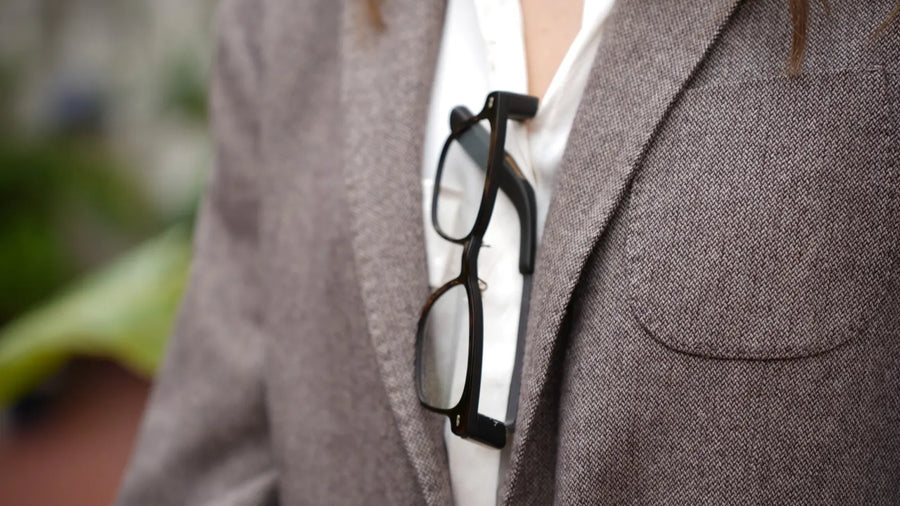
Few consumers would add both the RayNeo X3 Pro and MemoMind One to their cart simultaneously. However, a recent YouTube review directly compared the two, raising a question: "Are these two devices really worth comparing? "
Logically, they are not. But when you search for "smart glasses with display" or "AI glasses," both products appear. If you're deciding which one deserves your money, understanding how they're different is often more useful than simply comparing specifications.
Therefore, this seemingly "unequal" comparative analysis can actually provide you with valuable insights.
Quick Answer: Pick Smart Glasses That Fit You Best
Choose RayNeo X3 Pro if you:
-
Want a true standalone AR computer
-
Care about full-color AR experiences
-
Enjoy installing and experimenting with third-party apps
-
Don't mind carrying extra battery or wearing a heavier device
Choose MemoMind One if you:
-
Want AI assistance throughout your workday
-
Prefer glasses that look and feel like ordinary eyewear
-
Value privacy and don't want a built-in camera
-
Need battery life that comfortably lasts a full day
-
Want to stay under a $500 budget right now
If you're still unsure, here's a closer look at where each product excels.
MemoMind One vs RayNeo X3 Pro
| Spec | RayNeo X3 Pro | MemoMind One |
|---|---|---|
| Design | Face-mounted standalone AR computer | Standard everyday eyewear form |
| Weight | ~76 g(the device itself, excluding prescription lenses) | ~46.6 g(the standard version excluding prescription lenses) |
| Battery | 3–5 hrs continuous AR runtime | ~16+ hours mixed daily use per single full charge |
| Camera | Dual integrated cameras: 12MP photo RGB + OV SLAM spatial tracking sensor | None — privacy-by-design hardware |
| Display | Full-color MicroLED waveguide; 6,000 nits peak brightness | Dual monochrome green MicroLED waveguide; 2,000 nits peak brightness |
| Prescription support | Snap-on lenses | Embedded lenses |
| Control style | App & temple trackpad navigation | Single button + gestures |
| Price | Website ongoing price: $1,169; permanent MSRP $1,299 | $399–$499 Kickstarter campaign pricing |
Note: Data from the official RayNeo website and YouTube reviews.
Prices reflect RayNeo's official site as of July 22.
At the conclusion of this YouTube review, after comparisons across multiple dimensions, the two pairs of glasses ultimately tied in their overall scores. However, when price is factored in, the answers may differ.
Design and Everyday Wearability
RayNeo X3 Pro looks unmistakably like a piece of technology. Its cameras, sensors, and thicker frame look noticeably different from where camera modules typically sit on other smart glasses. According to RayNeo's official specifications, it weighs 76 g, making it noticeably heavier than most conventional eyewear.
MemoMind One is a frame that reads as ordinary eyewear from any angle, with less visible tech to explain, and a weight of roughly 46.6 g — over a third lighter.
If you've ever taken glasses off at the end of the day and felt relief, that gap is the kind of thing you feel by hour six, not just the 30 grams difference you notice on a spec sheet.
Camera and Privacy
The RayNeo X3 Pro features an outward-facing camera to support visual AI capabilities, yet this design makes the glasses look and feel more like a video recording device. Even with privacy safeguards or recording indicators, smart glasses equipped with cameras can alter the subtle dynamics of social interactions for a simple reason: bystanders often cannot tell for certain when the camera is active.
In contrast, the MemoMind One is completely camera-free, putting users in control of their own privacy. This allows the AI eyewear to blend naturally into settings where privacy and comfort are paramount—such as meeting rooms, classrooms, and cafés—without appearing intrusive or disruptive.
One design endows the device with visual intelligence, while the other eliminates uncertainty in social interactions.

Battery Life
Just as the review noted, battery life is one of the trade-offs inherent in products offering a full AR experience. RayNeo's own specs cite up to 5 hours of recording, 3 hours of music playback, or 36 minutes of continuous video—modest numbers that mean many users turn to third-party neckband power banks to get through a full day.
The MemoMind One is designed to prioritize AI-driven interactions and the display of lightweight visual information. This allows for a typical battery life of up to 16+ hours without the need for additional accessories—translating to roughly one to one-and-a-half days of usage for many users.
If your goal is simply to wear the glasses from morning meetings to your commute home without thinking about charging, battery endurance becomes much more valuable.
Software and AI Experience
RayNeo X3 Pro works more like a wearable Android computer. Users can browse the web, watch videos, install apps, and explore new AR experiences as the platform evolves. For developers and tech enthusiasts, that openness is one of its biggest strengths.
MemoMind One keeps things simple. Most AI features are available through voice commands or a single button on the temple. You can start a recording, recall past conversations, translate speech, or ask Memo AI for help without opening apps or navigating menus. Although the developer community for MemoMind is currently still in the preparatory stage, MemoMind One itself offers impressive features such as Memo+, AI long-term memory, and more.
Some people enjoy exploring new apps. Others just want AI that works quietly in the background.
Prescription Lenses
Both smart glasses support prescription lenses, but they take different approaches.
RayNeo X3 Pro uses a snap-on prescription lens system sourced through third-party lens makers. This makes it easier to remove or replace the optical insert, but it also adds extra thickness and weight to an already heavier frame.
MemoMind One integrates prescription lenses directly into the frame, maintaining the same look, fit, and balance whether prescription lenses are installed or not.
Neither approach is unusual. Integrated lenses generally provide a cleaner everyday wearing experience, while insert systems make it easier to separate the optical module from the main device.
Price
RayNeo X3 Pro is priced at a discounted $1,169, with a standard retail price of $1,299. MemoMind One is currently available through Kickstarter at $399–499, depending on the reward tier.
For the price of one X3 Pro, you could buy two MemoMind One units — a gap large enough that it functions as its own filter. If a sub-$500 budget matters, this table effectively picks the winner before you weigh anything else.
Conclusion
RayNeo X3 Pro prioritizes immersive AR computing; the MemoMind One other focuses on making AI quietly useful throughout the day. Both represent two different ideas of what AI glasses should be.
The best choice isn't about which glasses do more—it's about which glasses ask less of you while doing what you actually need.
FAQs
Which is better for everyday use, RayNeo X3 Pro or MemoMind One?
It depends on how often you expect to wear them. MemoMind One is built to stay on throughout the day, whether you're working, commuting, or meeting people. RayNeo X3 Pro is better suited to moments when you specifically want AR features, such as navigation, entertainment, or visual AI. Many users are unlikely to wear an AR headset continuously from morning to night.
Do RayNeo X3 Pro and MemoMind One have cameras?
No. Only RayNeo X3 Pro includes outward-facing cameras for visual AI, photos, and spatial tracking. MemoMind One is completely camera-free, making it easier to wear in meetings, classrooms, and other privacy-sensitive environments without raising concerns about recording.
Which smart glasses have better battery life?
Data indicates that MemoMind One lasts longer in typical daily use. It delivers over 16 hours of mixed usage on a single charge. RayNeo X3 Pro's dual displays, cameras, and AR processing consume considerably more power, so many users rely on the optional neckband battery for extended use.
Are MemoMind One glasses suitable for all prescriptions?
MemoMind One supports a wide range of single-vision prescriptions, but not every prescription. Very high prescriptions and progressive (varifocal) lenses are not currently supported. Before ordering, it's best to confirm that your prescription falls within the supported range to ensure the best fit and visual performance.