Three AI glasses compared: MemoMind One vs Meta Ray-Ban Display vs Blayzer
Note: Comparisons and hands-on impressions in this review are drawn from testing by tech reviewers @vrwithjasmine and @TheTechAuthority, cross-checked against Meta's official product specifications.
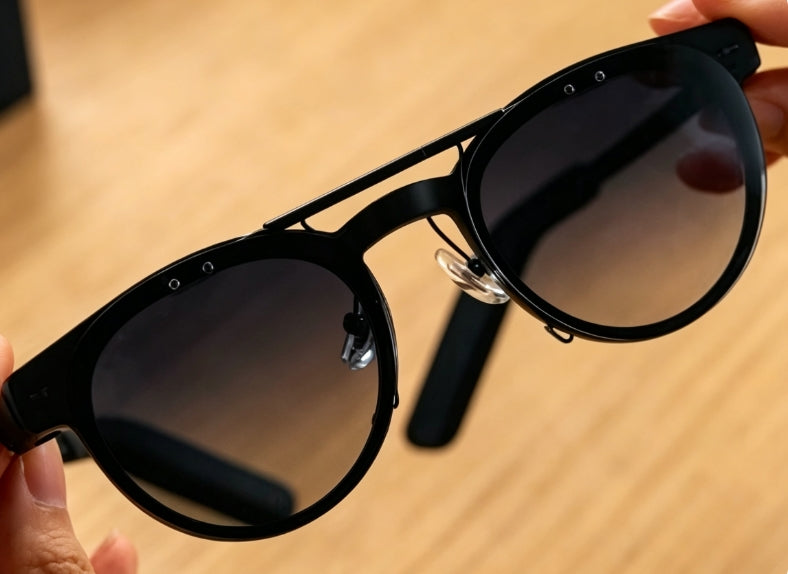
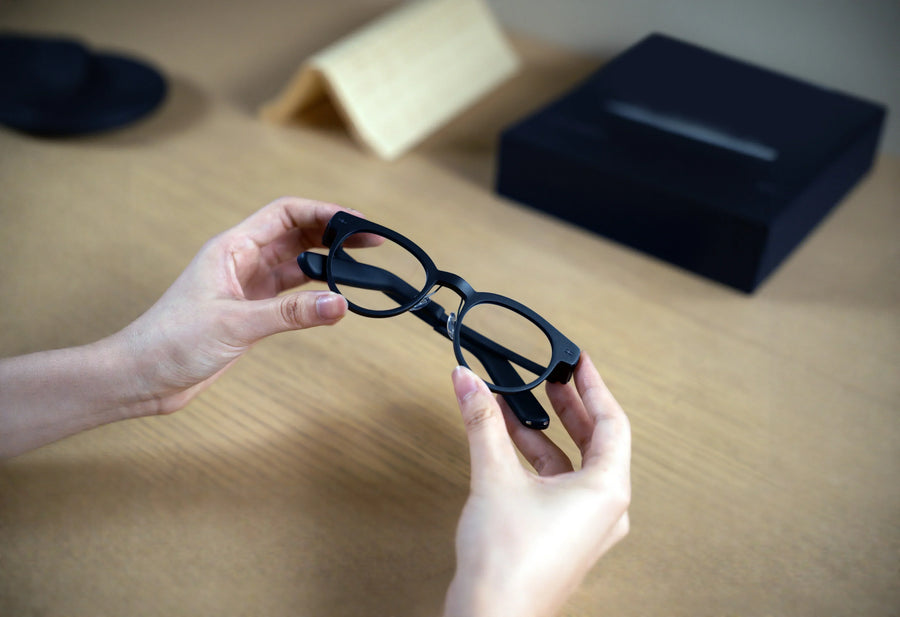
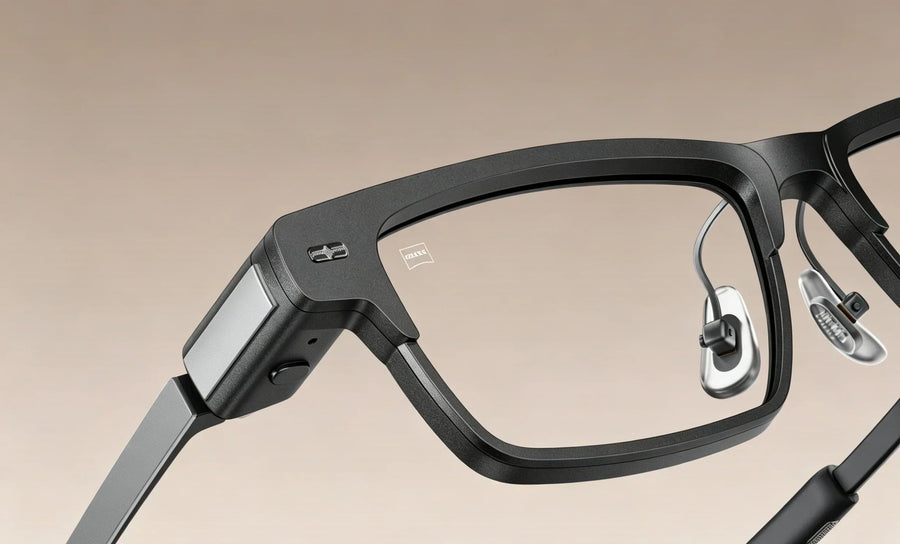
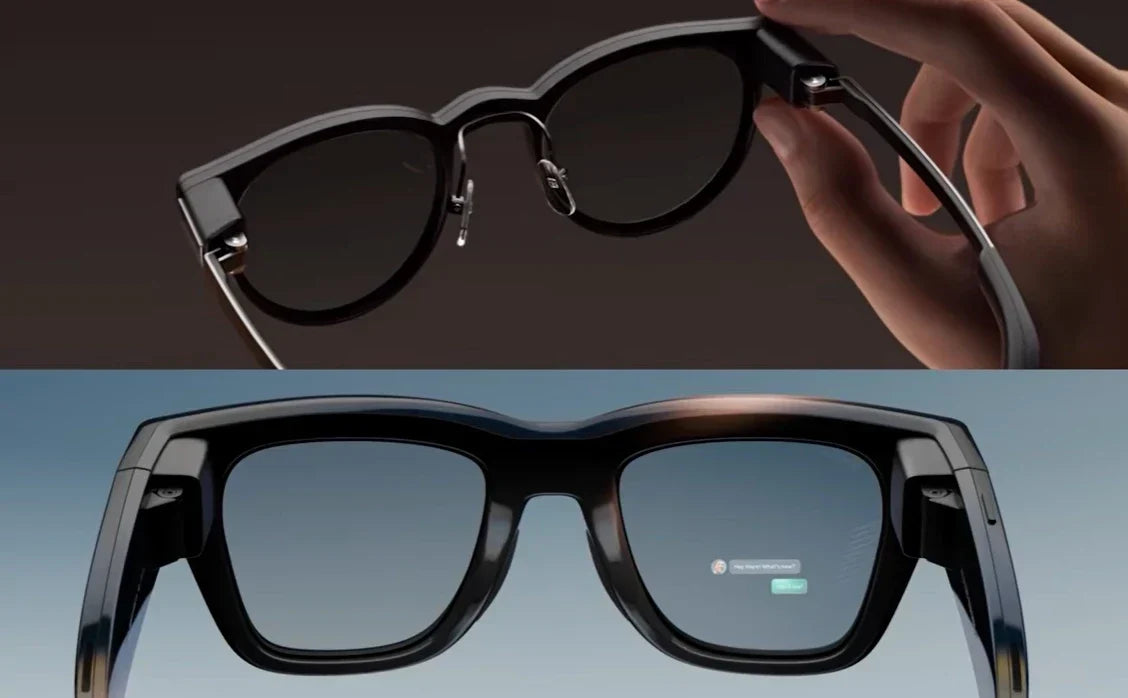
If you're shopping for AI glasses in 2026, a better way to further understand each one's pros and cons is to start by looking at this comparison: the Memomind One(the most natural display, camera-free), the Ray-Ban Meta Display (a full-color display), and the Ray-Ban Meta Blayzer (camera-based AI without a display).
Quick Choice for You
All three products are excellent—but they're built for different people.
-
Choose the Meta Ray-Ban Display if you want a more computer-like pair of AI glasses with a display, especially if a full-color HUD, camera preview, visual AI, and gesture-based interaction appeal to you.
-
Choose the Ray-Ban Meta Blayzer if you want camera-based Meta AI without a display, particularly if prescription compatibility and all-day comfort are more important to you than having information appear in your field of view.
-
Choose MemoMind One if your priority is wearing AI glasses all day—for meetings, commuting, work, and everyday life—while keeping a lightweight frame, long battery life, a heads-up display, and a camera-free design that feels more natural in professional and social settings.
AI Glasses Key Specs Compared
| Spec | MemoMind One | Meta Ray-Ban Display | Ray-Ban Meta Blayzer |
|---|---|---|---|
| Starting Price | From $399 (Kickstarter period) | From $799 (includes Meta Neural Band) | From $499 |
| Weight | 46.6g (lightest frame style) | ≈69g (reviewer measured; no official data) | 49g (standard size) |
| Display | Dual Micro-LED HUD | Monocular full-color HUD | — |
| Camera | — | 12MP camera (3× digital zoom) | 12MP ultra-wide camera |
| Control | Voice + head gesture + physical button | Voice + touch + Meta Neural Band | Voice + touch + physical button |
| Battery | Up to 16 hrs mixed use | Up to 6 hrs mixed use | Over 8 hrs on a single charge |
| Prescription Lenses | ✔ | ✔ | ✔ |
| Water Resistance | Splash-resistant (not waterproof) | IPX4 | IPX4 |
| Privacy | Camera-free | Camera LED indicator | Camera LED indicator |
| AI Focus | Productivity, memory & hands-free assistance | Visual AI, messaging & wearable computing | Visual AI, photography & hands-free assistance |
Detailed Comparison of Three Smart Glasses
Comfort and All-Day Wearability
The Meta Ray-Ban Display packs a full-color display, a 12MP camera, and the hardware needed to support gesture interaction through the Neural Band into a single frame. That added functionality also makes it heavier than MemoMind One.
@vrwithjasmine said battery life and weight were the two biggest factors determining whether she would actually wear smart glasses every day, noting that the Meta Display lasted only "around two to three hours" under active use while feeling noticeably heavy throughout the day.
MemoMind One stresses long-term comfort. It uses a lightweight magnesium-aluminum alloy chassis with flexible beta-titanium temples. Wide-angle elastic hinges adapt to different head shapes, while the core electronics are positioned behind the ears to distribute weight more evenly rather than concentrating pressure on the bridge of the nose. In the same review, Jasmine called MemoMind One "one of the most comfortable smart glasses that I've worn," adding that she could wear it through an entire workday without discomfort.
Another reviewer, @TheTechAuthority, reached a similar conclusion after comparing MemoMind One directly with the Meta Blayzer. He described MemoMind One's adjustable nose pads as "the most comfortable" among the smart glasses he had tested.
Camera vs. No Camera
Both the Meta Ray-Ban Display and Ray-Ban Meta Blayzer are camera-equipped glasses. They can capture photos and videos, livestream your perspective, identify objects with Meta AI, and support accessibility features such as Be My Eyes.
But a camera also changes the social experience of wearing smart glasses. @TheTechAuthority, who tested both pairs over several weeks, put it plainly: his friends will act a little differently cause the obvious camera on the smart glasses.
MemoMind One removes the camera entirely. That's a deliberate trade — you lose photo and video capture and camera-dependent features, but you gain a device that doesn't make the people around you second-guess whether they're being filmed.
Camera-free doesn't mean audio-free. MemoMind One uses its open-ear audio system, triple-directional microphones, and audio AI system for voice interaction, calls, and AI features, clearly capturing and accurately understanding your voice, enabling you to interact naturally with the AI and the world around you.
Display Experience
The Ray-Ban Meta Blayzer has no visual display. Everything—from notifications to Meta AI responses—comes through open-ear audio. That's perfectly adequate if you mainly use voice commands, but less convenient for reading messages, following navigation, or viewing live captions discreetly.
Meta Display is designed more like a wearable computer. A full-color display appears in the right lens. Together with the Neural Band, users can navigate menus, scroll content, and control the interface using subtle hand gestures. It's particularly for creators who frequently capture photos or videos from a first-person perspective. However, many interactions require deliberate navigation rather than a quick glance.
MemoMind One's dual Micro-LED is built around simpler, higher-frequency tasks: glancing at a calendar entry, reading a live caption, or seeing a notification surface automatically the moment you look up, with no wristband to keep charged or misplace. Additionally, you can configure it to sync messages from mobile apps like WhatsApp.
AI Assistant
Meta AI is built around vision. Because both the Ray-Ban Meta Display and the Blayzer include a camera, you can ask questions about what you're looking at, identify landmarks or products, translate signs, or let Meta AI understand your surroundings in real time.
Memo AI is designed to make everyday information easier to capture, organize, and recall. It includes familiar AI features such as AI Recorder, live captions, real-time translation, meeting summaries, and action-item extraction, helping you stay present in conversations without worrying about taking notes. What sets MemoMind apart is its Memory feature. Rather than simply storing transcripts, Memory automatically connects people, places, conversations, and events into a searchable personal timeline.
Battery Life
Official battery life figures for smart glasses do not always align perfectly with real-world performance.
Meta rates the Ray-Ban Meta Display at up to 6 hours of mixed use, while real-world reviewers have reported substantially shorter runtimes under continuous, display-heavy use. @vrwithjasmine, for example, found around 2–3 hours during active use.
MemoMind One is rated for more than 16 hours of mixed use and 3+ days of connected standby. A recent internal battery test also reached 17 hours with AI Memory continuously enabled. It can also charge from 0% to 80% in 30 minutes, sufficient for a full day's use.
FAQs
What should I look for when buying AI glasses?
When choosing AI glasses, consider more than just price and features. Key factors include whether you want a display or camera, battery life, weight and all-day comfort, privacy, prescription support, AI capabilities, and how you interact with the glasses. The right choice ultimately depends on your needs.
Are camera-free AI glasses better for privacy?
Camera-free AI glasses can offer a more privacy-conscious experience because they cannot capture photos or videos. This can make them less intrusive in meetings, workplaces, and social situations where people may be uncomfortable around a wearable camera. However, camera-free glasses can still use microphones and other sensors for features such as voice interaction, so camera-free does not mean completely sensor-free.
Are AI glasses with a display better than camera-only AI glasses?
Not necessarily. AI glasses with a display are better suited to visual information such as notifications, captions, navigation, and glanceable content, while camera-only glasses can focus on hands-free photography, visual AI, and audio-based assistance without adding display hardware.
Related Blogs
More MemoMind stories from the same category.