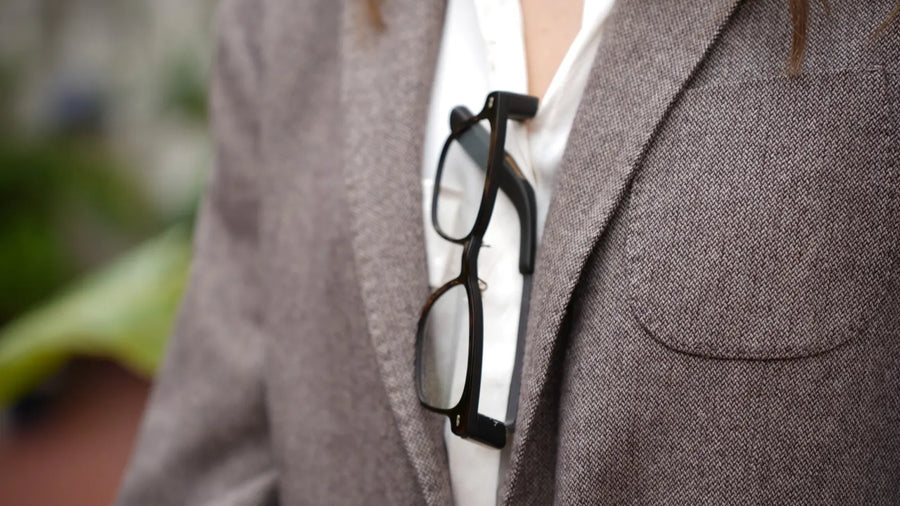
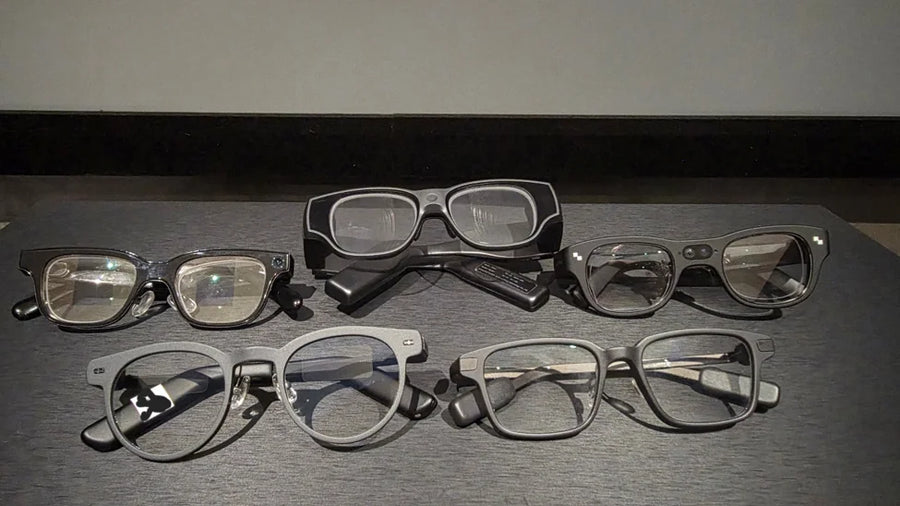
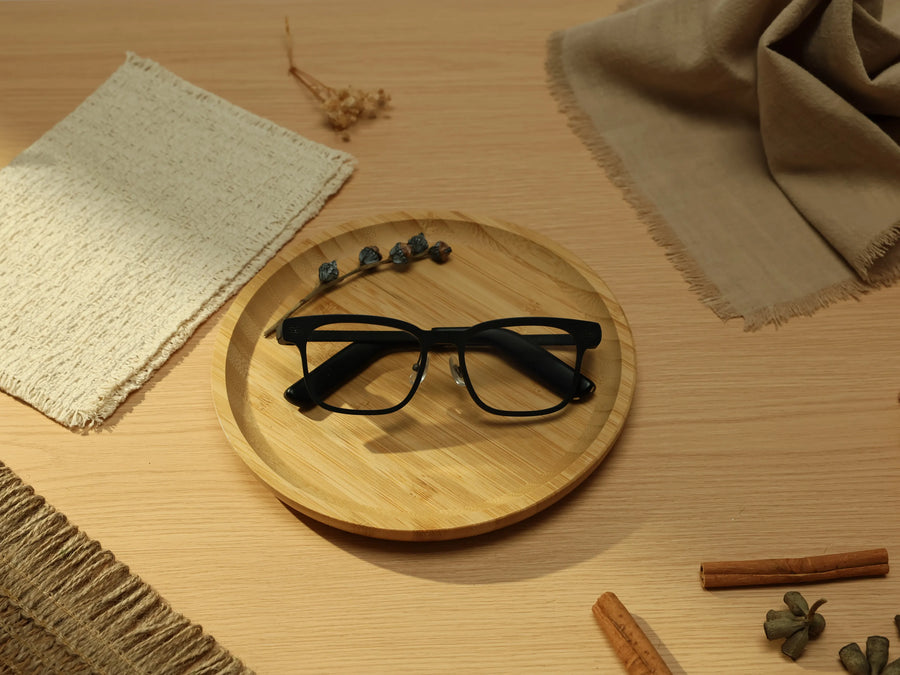
Prescription AI Glasses Guide for MemoMind One
Last updated: August 31, 2026
If you wear prescription glasses every day, "Can I get MemoMind One with prescription lenses?" is probably your first question. Yes — MemoMind One was built around prescriptions from the start, not adapted for them later.
How MemoMind One Integrates Prescription Lenses
With traditional glasses, replacing lenses is routine. Most optical stores can swap lenses while keeping the same frame. Prescription AI glasses work differently.
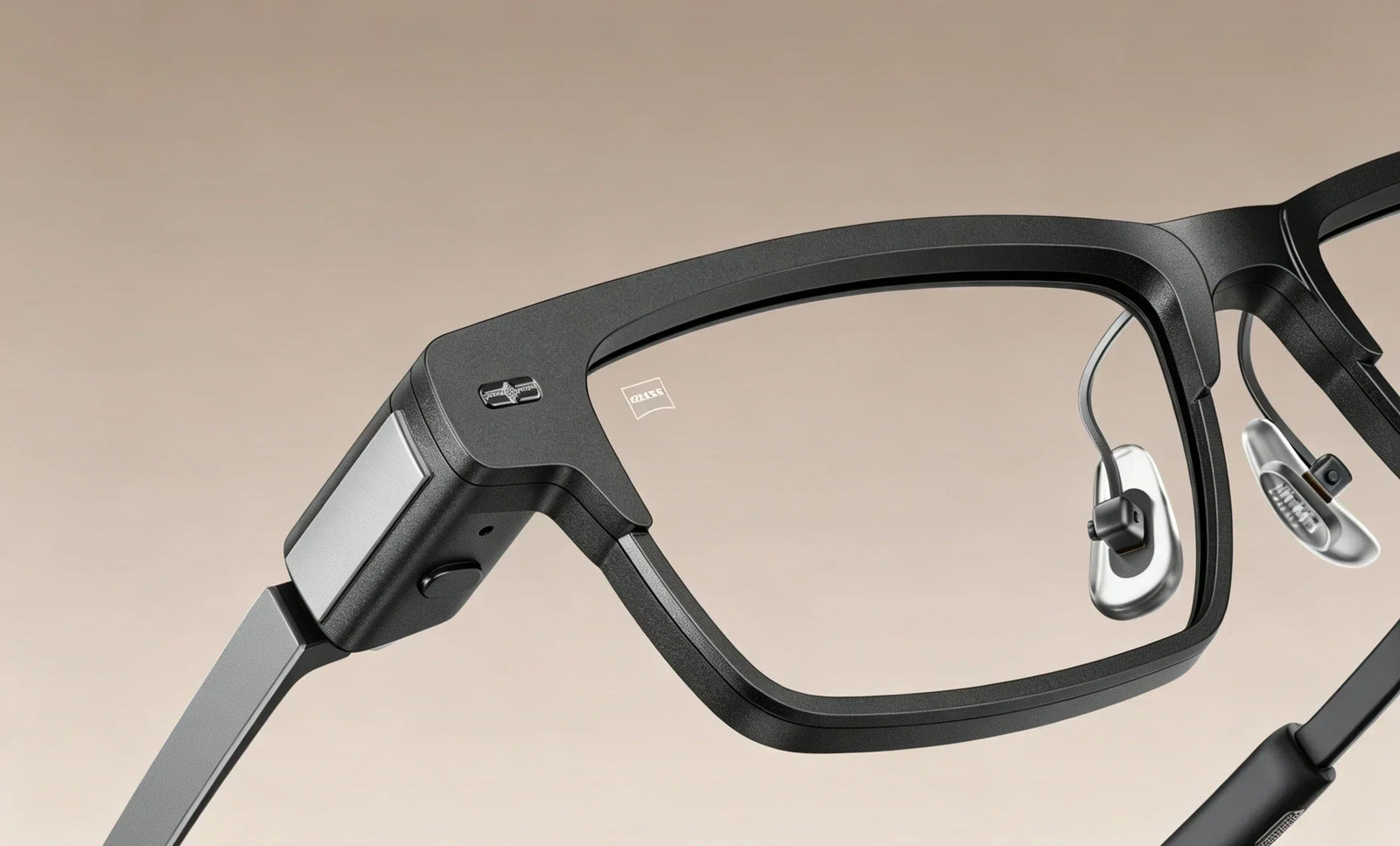
Inside smart glasses products like MemoMind One, however, the display is projected through an optical waveguide built directly into the lens system. Waveguide displays work by guiding light through the lens using total internal reflection, which only works correctly when light enters and exits the lens at very specific, tightly controlled angles, a property of waveguide optics that is well documented in AR optical engineering literature. Because of this, the display relies on precise optical alignment; the prescription lens and display cannot simply be stacked together with third-party clip-ons or aftermarket lenses.
MemoMind One integrates the prescription lens and waveguide display, which need to be precisely aligned during manufacturing, into a single optical system. The result is a cleaner image, more stable display alignment, and a wearing experience that feels much closer to ordinary glasses. Once bonded, it's fixed (see the FAQ below for what that means if your eyesight changes).
Reading Your Prescription: SPH, CYL, AXIS, PD
-
SPH — base correction, in diopters, for near- or farsightedness
-
CYL — extra correction for astigmatism
-
AXIS — orientation (0–180°) of the astigmatism correction
-
PD — distance in millimeters between your pupils
Get PD measured by an optometrist rather than estimating it. Because MemoMind One's optics are custom-aligned, an inaccurate PD can shift where the display lands relative to your eye.
Prescription Lens Options and Supported Ranges
For MemoMind One Prescription Edition, the currently supported prescription range is:
| Parameter | Supported Range | Notes |
|---|---|---|
| SPH | -6.00D to 0.00D | |
| Astigmatism (CYL) | -2.00D to +2.00D | Beyond this needs custom fitting |
| Combined power (SPH+CYL) | ≤ 10.00D | At 1.74 index, tolerance narrows past −8.00D sphere |
| PD | Required per eye | Over 70mm total may need confirmation |
| AXIS | 0°to 180° | |
| Reading add (ADD) | Not supported | |
| Progressive lenses | Not supported | |
| Prism correction | Not supported |
Your prescription also needs to reflect full distance correction, not an under-corrected one written for close-up comfort. AR displays are calibrated for distance vision, so an under-corrected lens can make the projection look blurry or doubled.
Because each prescription lens is manufactured per order, the prescription edition currently does not support personalized frame customization.
Comfort and Prescription Lens Quality
Getting the right prescription is only half the experience. If smart eyewear feels heavy or uncomfortable, most people simply won't wear it for long periods, missing out on the convenience the AI features offer. If you decide to choose MemoMind prescription AI glasses, you might also want to take a look at these.
-
Weight: MemoMind One weighs just 46.6g in its lightest frame style. The final weight after prescription lens fitting varies depending on your prescription, since lens thickness differs across prescriptions.
-
Nose pad: Adjustable nose pads on MemoMind One allow users to fine-tune the position of the glasses for greater stability and long-lasting comfort without frequent readjustments.
-
Lenses: MemoMind One uses 1.67 high-index prescription lenses, which are thinner and lighter than standard 1.50 lenses. For users with stronger prescriptions, this helps reduce lens thickness and overall weight while maintaining a cleaner, more natural appearance.
-
Light transmittance: Outside the display area, the MemoMind lenses provide 98% light transmittance, delivering a visual experience that feels similar to conventional prescription glasses during everyday activities.
For outdoor use, MemoMind One offers clip-on sunglasses as an optional accessory ($49 right now on our official website). Customers who pay the pre-order deposit will receive a free pair of clip-on sunglasses. The clip-on design makes it easy to transition between indoor and outdoor environments without switching glasses.

Choosing Your Edition and How to Order
-
Wear prescription glasses every day
-
Have a stable single-vision prescription
-
Want an integrated experience without wearing contact lenses
The edition without prescription may be a better choice if you:
-
Usually wear contact lenses
-
Only need glasses occasionally
-
Expect your prescription to change frequently
FAQs
Can I swap or replace MemoMind One prescription lenses later if my eyesight changes?
Not yet. The lens is bonded to the display during manufacturing, so there's no swap or standalone replacement service today. The team is testing safe ways to disassemble and re‑bond a new prescription layer.
What should I check before buying AI prescription glasses with a display?
A prescription less than three months old, with SPH, CYL, AXIS, and PD on hand, and confirmation it's single‑vision — progressives, bifocals, prism, and reading‑add aren't supported yet.
Can I use my own prescription on MemoMind One?
Yes, as long as it's single‑vision and within the supported range. Make sure it's current, since the lens is bonded during manufacturing and can't be swapped later.
What do I receive when my prescription lenses are ready?
A fully assembled frame — lenses are cut, fitted, and bonded before shipping. No separate optician visit needed.
Related Blogs
More MemoMind stories from the same category.