Lunettes IA et autres objets connectés IA : quelle différence ?

Les appareils portables d'IA – des dispositifs qui combinent des capteurs avancés avec l'intelligence du cloud ou de la périphérie – ont évolué rapidement au cours de la dernière décennie. ZDNET souligne que le marché de ces outils intelligents est en bonne voie pour multiplier par 10 d'ici 2033, reflétant une solide croissance de l'industrie. Malgré cela, le changement le plus important n'est pas l'échelle, mais la direction.
Les appareils portables d'IA courants d'aujourd'hui, y compris les montres intelligentes, les bagues et les bijoux intelligents, sont exceptionnellement bons pour traduire les signaux biologiques – tels que le sommeil, la fréquence cardiaque, le stress et les niveaux d'oxygène dans le sang – en informations de santé personnalisées.
Ils sont tous conçus pour répondre à une question fondamentale : Que se passe-t-il à l'intérieur de votre corps ?
Pourtant, les exigences des gens évoluent. Et si les utilisateurs s'attendaient à ce que l'IA perçoive le monde environnant, voie les choses de leur perspective et délivre des réponses instantanées en temps réel ? C'est exactement là que les lunettes d'IA apportent une valeur unique.
Appareils portables d'IA orientés vers l'intérieur vs. vers l'extérieur
Les gens ont tendance à considérer les nouveaux appareils portables d'IA comme de simples mises à niveau matérielles itératives. En fait, l'industrie est témoin d'un changement fondamental : du capteur physique orienté vers l'intérieur à la perception environnementale orientée vers l'extérieur, ce qui remodèle les modes de vie, de travail et d'interaction sociale des gens.
Cette évolution ne signifie pas que les lunettes d'IA modernes sont là pour remplacer ou s'opposer à vos appareils existants. Au lieu de cela, il s'agit d'un écosystème complémentaire où différents matériels servent différentes dimensions de nos vies.
Les appareils portables d'IA orientés vers l'intérieur se concentrent sur votre état intérieur
| Appareil portable d'IA | Fonctionnement | Objectif principal |
|---|---|---|
| Montres intelligentes et anneaux intelligents | Collecte continue de données biométriques en arrière-plan avec une interaction utilisateur minimale. | Construire des informations à long terme sur la santé, la forme physique, la récupération et le stress. |
| Bandeaux d'IA | Surveiller l'activité des ondes cérébrales pendant des sessions dédiées telles que le sommeil ou l'entraînement à la concentration. | Améliorer les performances cognitives, la méditation ou la qualité du sommeil. |
| Patchs d'IA et appareils portables médicaux | Surveiller en continu les signaux physiologiques sur de longues périodes. | Soutenir la surveillance de la santé à long terme et les soins cliniques. |
Ces dispositifs de détection interne sont peu intrusifs et basés sur des données, mais les utilisateurs doivent toujours ouvrir une application ou consulter l'écran de leur téléphone pour digérer et appliquer les informations collectées.
Les appareils portables d'IA orientés vers l'extérieur ouvrent une nouvelle façon d'interagir avec le monde
Au lieu de suivre votre corps, des appareils comme les lunettes d'IA agissent comme des interprètes actifs et contextuels de votre environnement. Ils regardent vers l'extérieur, déplaçant le rôle de l'IA du suivi rétrospectif à l'interaction en temps réel.
Ils ne demandent pas « quel est votre rythme cardiaque ? » Au lieu de cela, ils répondent « que se passe-t-il devant vous en ce moment, et comment pouvons-nous le gérer ensemble ? »
Ce changement ne s'oppose pas aux wearables AI mentionnés ci-dessus — il les élève, introduisant un style de vie fluide où vous pouvez enfin lever les yeux, parler et rester présent, et laisser l'IA naviguer le bruit numérique pour vous.

Ce qui distingue les lunettes intelligentes
L'avantage décisif des lunettes AI n'est pas qu'elles offrent plus de fonctionnalités, mais qu'elles modifient la géométrie même de l'interaction numérique. Alors que les smartphones nous obligent à regarder constamment vers le bas et à nous retirer dans un écran, les lunettes AI changent le paradigme en introduisant deux capacités distinctes et non superposables.
Intelligence contextuelle dans le champ de vision
Les lunettes AI transforment l'IA d'un appareil que vous devez consulter en un compagnon intuitif et en temps réel qui comprend votre monde tel que vous le vivez.
Intégration de la réalité sans friction
Elles intègrent les capacités numériques directement dans les flux de travail quotidiens sans interrompre votre concentration.
En pratique, cela signifie accéder aux outils essentiels entièrement en mode mains libres et par un simple coup d'œil : jeter un coup d'œil à un menu dans une ville étrangère pour une traduction instantanée, visualiser des directives rapides pendant une présentation, ou capter des indices de navigation subtils en marchant vers une réunion — tout cela sans jamais tendre la main vers un téléphone ni rompre le contact visuel avec les personnes autour de vous.
Ce type de lunettes intelligentes pourrait bien être ce dont nous aurons besoin en 2026.
À quoi devraient ressembler les lunettes IA idéales
Pour que les lunettes d'IA deviennent des appareils du quotidien, elles doivent résoudre de vrais problèmes sans en créer de nouveaux.
Une paire idéale devrait être :
-
Suffisamment légères pour être portées toute la journée.
-
Confortables avec des verres de prescription.
-
Suffisamment discrètes pour être utilisées en public.
-
Conçues dans le respect de la vie privée.
-
Capables de fournir des informations utiles sans devenir distrayantes.
Au lieu d'exiger votre attention, l'IA devrait fonctionner discrètement en arrière-plan et n'apparaître que lorsqu'elle est vraiment utile.
Comment MemoMind One est conçu
Au lieu de forcer les utilisateurs à adopter des comportements socialement inconfortables, les lunettes MemoMind One AI introduisent un flux de travail silencieux et sans friction, adapté à une concentration profonde et soutenue.
Au lieu de s'appuyer sur une interaction vocale constante, MemoMind prend en charge l'IA proactive, permettant aux informations pertinentes d'apparaître automatiquement en fonction du contexte de la conversation. Les utilisateurs peuvent également naviguer dans les fonctions clés avec de simples gestes, réduisant ainsi le besoin de parler à voix haute en public.
La confidentialité est une autre priorité. Plutôt que d'inclure des caméras orientées vers l'extérieur, MemoMind adopte une conception sans caméra qui aide les utilisateurs à se sentir plus à l'aise dans les environnements professionnels et sociaux, tout en réduisant le poids et en améliorant l'efficacité de la batterie.
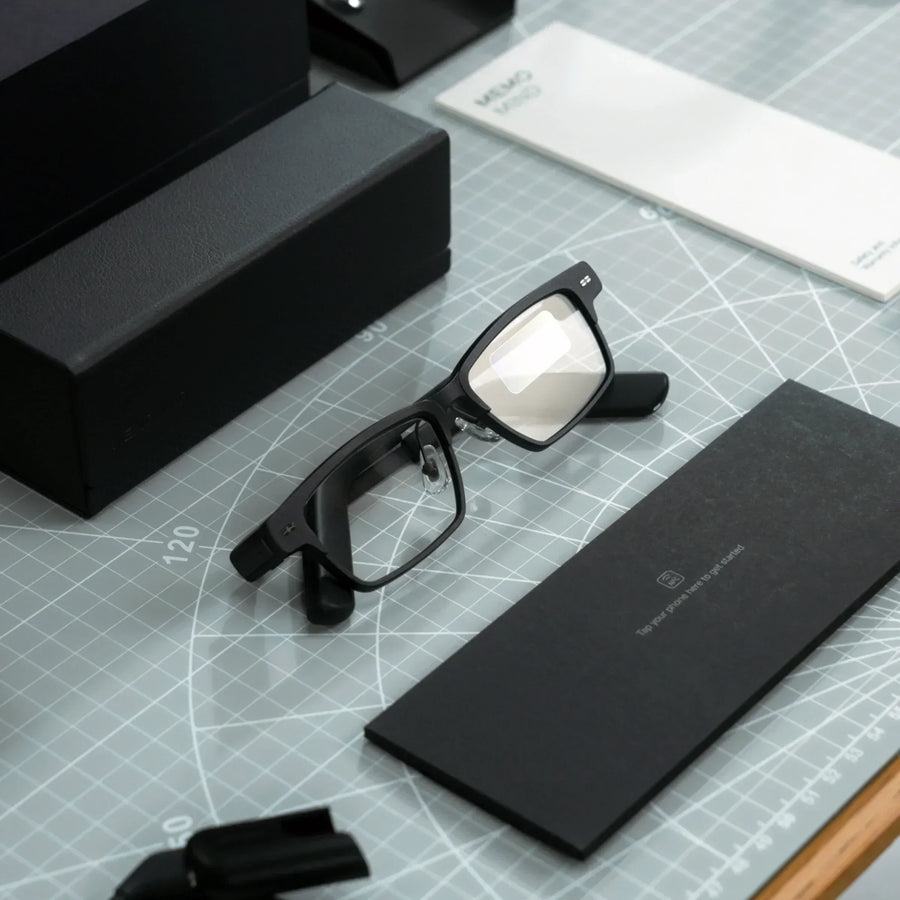
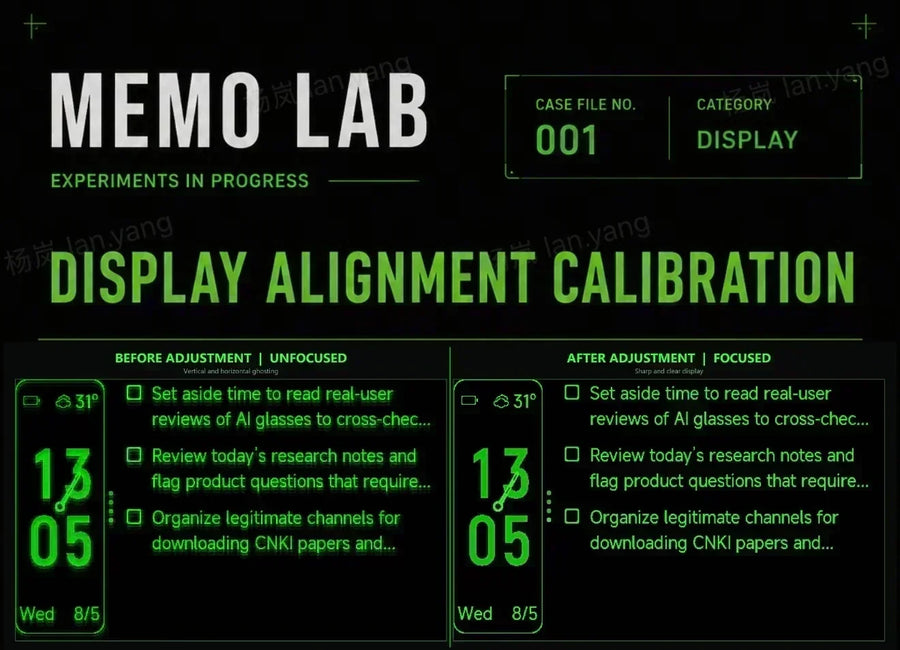
Combiné à son cadre léger, à son mode audio privé et à son affichage tête haute, MemoMind s'efforce de faire en sorte que l'IA ressemble à une extension naturelle des lunettes de tous les jours – et non à un autre gadget en quête de votre attention.
Comprendre l'architecture matérielle (que nous avons détaillée ci-dessus) est essentiel pour expliquer pourquoi MemoMind One excelle en matière de réactivité audio et IA par rapport aux autres acteurs de l'industrie. Ainsi, si vous évaluez actuellement vos options entre le MemoMind One et d'autres marques de lunettes AI, vous pouvez lire quelques articles comparatifs entre le MemoMind One et Even Reality G2 et Meta Display.
FAQ
Les lunettes AI sont-elles meilleures que les montres intelligentes ?
Pas nécessairement. Les montres intelligentes sont meilleures pour le suivi continu de la santé, tandis que les lunettes AI excellent pour fournir des informations en temps réel en fonction de votre environnement. Elles servent des objectifs différents et fonctionnent bien ensemble.
Les lunettes AI peuvent-elles remplacer les smartphones ?
Pas aujourd'hui. La plupart des lunettes AI complètent les smartphones en rendant les tâches courantes plus rapides et plus mains libres, plutôt que de les remplacer entièrement.
Pourquoi les lunettes AI sont-elles de plus en plus populaires ?
Les progrès de l'IA, des écrans légers, de la technologie des batteries et du traitement embarqué ont rendu les lunettes AI plus pratiques pour une utilisation quotidienne, notamment pour la productivité, les voyages, la communication et l'assistance mains libres.
Qu'est-ce qui distingue MemoMind des autres lunettes AI ?
MemoMind se concentre sur une utilisation quotidienne discrète avec une conception sans caméra, une assistance AI proactive, une construction légère et une interaction axée sur la confidentialité, ce qui la rend adaptée aux utilisateurs qui souhaitent un support AI sans attirer l'attention.
Related Blogs
More MemoMind stories from the same category.