MemoMind One Smart Glasses Display Resolution, Brightness, FOV Explained
The MemoMind One AI glasses feature a display resolution of 600 × 350 — a figure that seems negligible when compared to smartphone or laptop displays. But that comparison assumes smart glasses serve the same display function as a phone, and they don't.
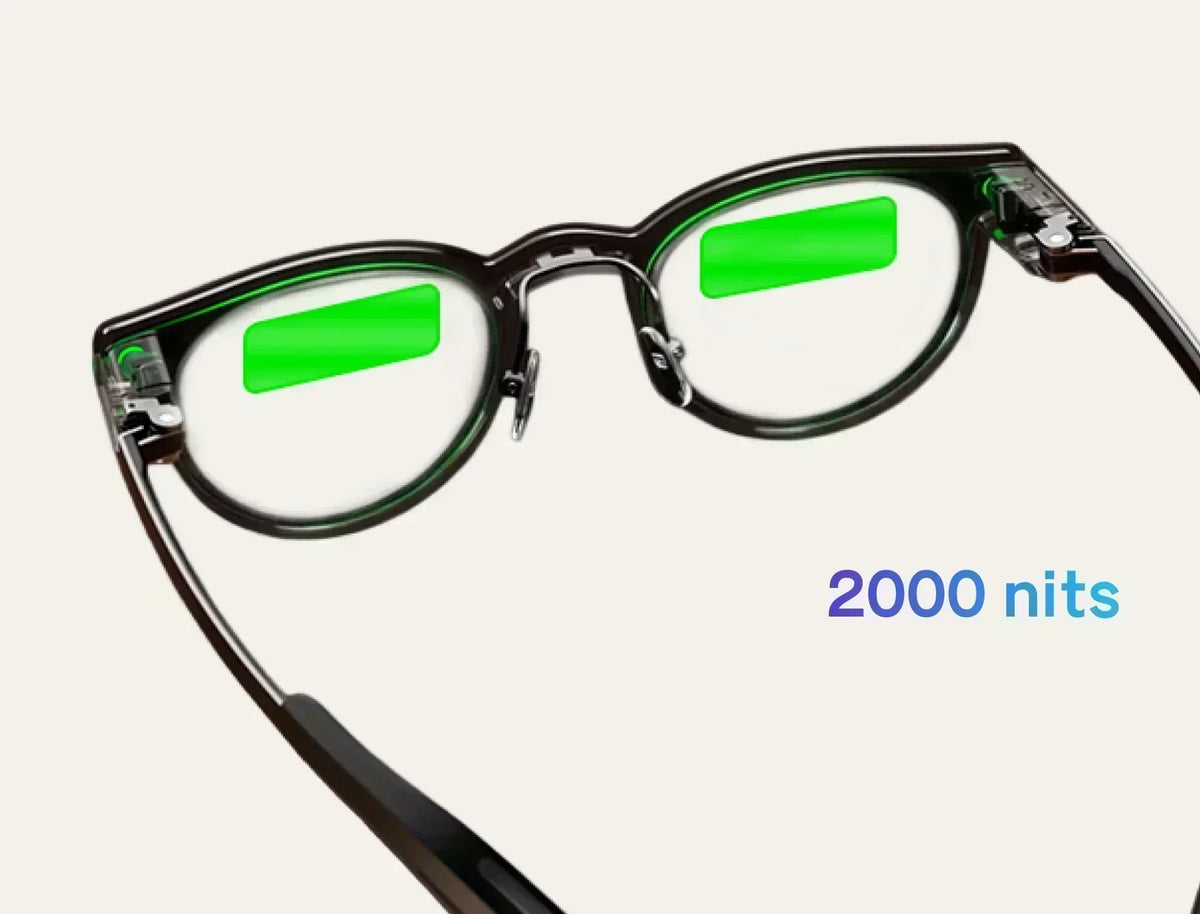
A smart glasses display serves a different function than a phone screen. Once that's understood, the specs make sense. MemoMind One uses a binocular single-green Micro-LED engine with a 2D diffractive waveguide, up to 2000 nits of in-eye brightness, and a 25° diagonal field of view. This article breaks down what each spec actually means and why the numbers look the way they do.
What kind of display do smart glasses use?
Most smart glasses run on HUD technology, not the kind of screen a phone or laptop uses. A HUD, or heads-up display, is a transparent display that projects information directly into a user's line of sight. It was originally developed for military aircraft, later adopted in commercial aviation and cars.
For smart glasses, that translates into a specific job: not replacing your phone, but reducing the moments you'd otherwise need to pull it out. That reframes the right question from "how many pixels does it have" to "can I read what I need, exactly when I need it" — something that depends on far more than display resolution alone.
MemoMind One Display Breakdown
A quick overview
| Specification | MemoMind One | What It Means in Daily Use |
|---|---|---|
| Display Technology | Binocular single-green Micro‑LED | Delivers vivid bright visuals with a miniature, power‑saving optical engine |
| Optical System | 2D Diffractive Waveguide | Projects digital overlays while keeping lenses transparent to your surroundings |
| Display Resolution | 600 × 350 | Sufficient pixel density for crisp text, icons and simple graphics at a quick glance |
| Brightness | Up to 2000 nits in‑eye brightness | Remains visible indoors and under regular outdoor sunlight |
| Field of View | 25° diagonal FOV | Shows essential info without overwhelming or blocking most of your natural sightline |
| Virtual Viewing Distance | Adjustable 1–5 meters | Minimizes constant eye refocus strain during all‑day extended wear |
| Display Adjustment Options | Brightness, vertical height, virtual depth | Customize screen position and brightness to match your eye comfort preferences |
| Refresh Rate | 30 Hz | Ensures smooth text scrolling and fluid navigation UI transitions for daily text use |
| Privacy Performance | Ultra-low outward light leakage | Prevents people beside you from easily reading your on‑screen private content |
Why is the resolution only 600 × 350?
MemoMind One's underlying optical engine natively renders at 640 × 480, but the resolution actually displayed to the eye is 600 × 350. It's a margin reserved for image alignment. Bonding the waveguide to the optical engine during assembly introduces small, unavoidable tolerances on each side. Then software compensates by independently adjusting each eye's image coordinates within that reserved margin until the combined image lines up correctly.
Pushing native resolution higher generally means a more demanding optical engine, more heat, and more bulk, none of which meaningfully improves a MemoMind One display built to be your natural and comfortable all-day wear.
Is 2000 nits bright enough for outdoors?
For smart glasses, a display that holds up against direct sunlight stays legible without forcing you to shade the lens or stop to read it. One that isn't bright enough quietly becomes unreadable exactly when you need it most — like checking a direction mid-walk.
The MemoMind One offers a peak brightness of 2,000 nits and supports dynamic brightness adjustment. For extremely bright outdoor environments, the MemoMind One comes with a dedicated clip-on sunglass accessory.
What does 25° field of view actually look like?
Field of view is the angular size of the area where a display can show content — in practical terms, how much of your vision the digital layer occupies.
A wider FOV can fit more information on screen at once, but it also means more of your natural vision is covered by digital content, which raises the risk of the display feeling intrusive or blocking things you'd otherwise want to see clearly.
MemoMind One uses a 25° FOV, roughly equivalent to holding a smartphone 10 centimetres in front of your eyes. It helps text and icons look sharper than the raw 600 × 350 figure suggests. It also keeps the display sized for what it's actually meant to show within easy glance range, without interfering with walking or talking to someone in front of you.
How does the Micro-LED and waveguide display work?
The MemoMind One utilizes a Micro-LED engine as its image source. Each pixel emits its own light, eliminating the need for the separate backlighting found in LCD panels. This allows the engine to be compact and energy-efficient enough to be housed within the temple of the glasses.
Images are then transmitted onto the transparent lens via the MemoMind One's 2D diffractive waveguide. The waveguide optics are specifically optimized for particular pixels and colors, resulting in minimal light leakage and ensuring that the display remains essentially private to the wearer.
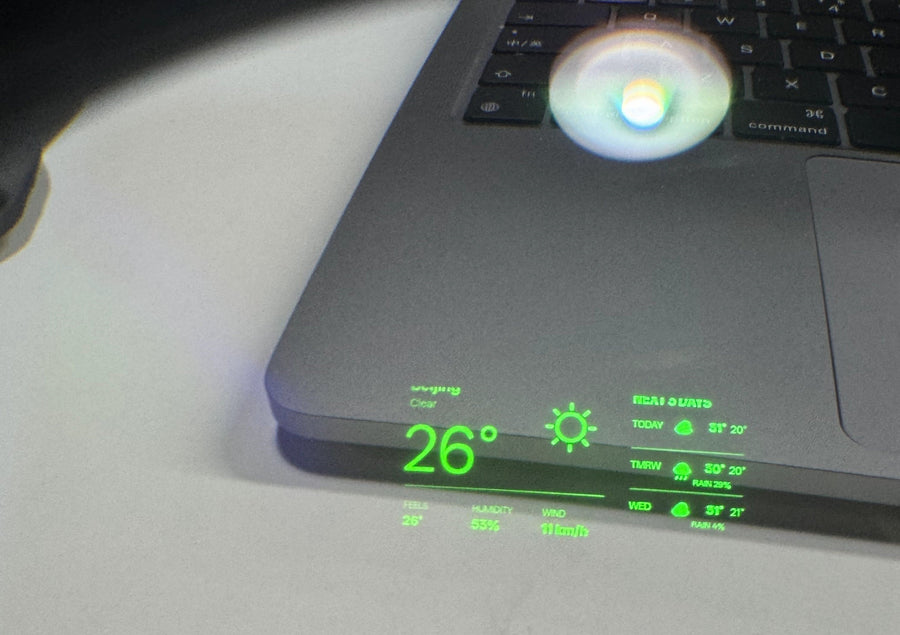
One thing to note: images on the MemoMind One appear primarily in green. This choice leverages the peak sensitivity of the human eye around 555 nanometers — the same reason green has been the default color for aviation HUDs since the era of early fluorescent displays, as it ensures clear visibility at lower power levels.
Does the display cause eye strain during all-day wear?
Two design choices address this directly.
First, the virtual viewing distance is adjustable from 1 to 5 meters, which minimizes the constant eye refocus strain that can happen when a display is fixed too close to the eye.
Second, display position is customizable — you can adjust vertical height and virtual depth to match your personal comfort.
Related Blogs
More MemoMind stories from the same category.